Infrastructure, connectivity, and business: the keys to San Isidro’s success in Lima
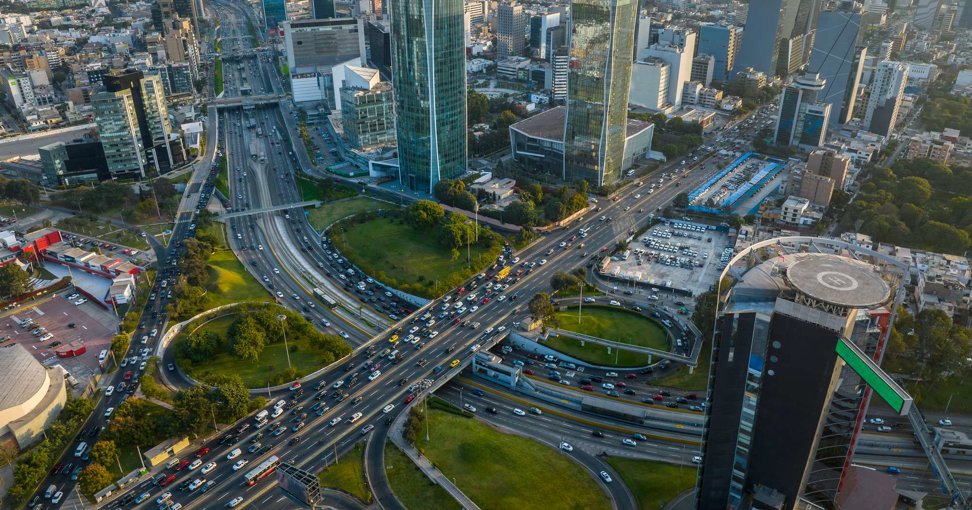
Is San Isidro consolidating itself as the financial heart of Lima?
The district of San Isidro, located in the city of Lima, is widely recognized as the main financial center of the capital and, in many respects, of the country. This area concentrates not only headquarters but also numerous branches of most Peruvian and foreign banks operating in the national market. Likewise, it hosts offices of insurance companies, service firms, multinational corporations, and prestigious consulting companies, reinforcing its strategic role within the Peruvian economy and positioning it as a key hub for business decision-making.
Due to this high concentration of financial and corporate institutions, San Isidro experiences intense and constant economic activity throughout the day. The presence of these organizations not only stimulates commerce and services in the district, but also generates direct and indirect employment, promotes innovation, and attracts both national and international investment.
In this context, various multinational companies and headquarters of major banks have chosen San Isidro as the ideal location to develop their strategic and administrative operations. Among the main entities established in this district are BBVA, BanBif, Scotiabank Perú, Citibank del Perú, Banco GNB, Bank of China (Peru), Santander Perú, and ICBC Perú Bank S.A.. This preference is due to multiple factors, such as its privileged location within the city, connectivity, quality of services, security, and a highly competitive and consolidated business environment.
For all these reasons, San Isidro not only maintains its reputation as Lima’s principal financial center, but is also progressively consolidating itself as the true corporate epicenter of Peru, projecting itself as a key space for economic development, foreign investment, and business expansion in the region.
San Isidro: A symbol of modernity and infrastructure development?
The district of San Isidro has established itself as one of the leading symbols of modernity, urban growth, and economic development in the city of Lima. This area is home not only to important financial centers, but also to a diverse commercial offering that includes shopping galleries and notable establishments. Among them are the San Isidro Galleries, the Camino Real Shopping Center, the San Isidro Municipal Market, and the Producers Market. Likewise, the district hosts well-known department stores such as Ripley and Falabella, as well as bookstores and cultural spaces such as Book Vivant and Librería Sur, among others.
In addition to its dynamic commercial activity, San Isidro stands out for its high-end hotel infrastructure. Prestigious hotels located in the district include The Westin Lima Hotel & Convention Center, Country Club Lima Hotel, Hotel Los Delfines, Meliá Lima, and Costa del Sol Wyndham Lima City, among others. The district also boasts an outstanding fine dining scene, with renowned restaurants such as Osaka, Mérito, Osso, Cosme, and Astrid & Gastón, which attract both residents and national and international visitors.
In the cultural sphere, the district offers places of interest such as the Enlace Arte Contemporáneo gallery and Huallamarca, a site museum located in the heart of the district that showcases the historical richness of the area. It also houses the Museo Marina Núñez del Prado, located in a neo-colonial house dedicated to the sculptor and her artistic legacy.
San Isidro is also characterized by its emblematic landmarks that provide an atmosphere of distinction, sophistication, and exclusivity. It has become an important meeting point for the upper class and the business sector, where tradition and modernity coexist harmoniously. Its historic constructions and expansive green areas, such as Bosque El Olivar —a national monument housing the municipal library and cultural facilities— and the Lima Golf Club, blend with modern corporate and residential buildings, reflecting a balance between past and present that defines the district’s identity.
When was San Isidro founded?
San Isidro is one of the 43 districts that make up the province of Lima in Peru. It is strategically located within the capital and borders districts known for their urban development and socioeconomic status, such as Miraflores, Surquillo, Jesús María, and San Borja. In addition, it has access to the Pacific coastline, giving it significant geographic and scenic value.
The district covers an area of 9.82 km² and is considered one of the most modern and dynamic in Lima. Despite its modernity, San Isidro has a history spanning nearly a century, as it was officially founded on April 24, 1931.
According to the 2017 national census, the district has an approximate population of 60,735 inhabitants, reflecting its residential character combined with intense financial and commercial activity.
The area of San Isidro was part of the Tambo de Limac, known as Rimajtampu, during the pre-Hispanic era, and was considered the capital of the Guatca (or Huatica) lordship under the leadership of the curaca Chumbi Charnan. The union of several lordships gave rise to what is now known as the district of San Isidro.
Around 1539, during the colonial period, the conquistador Francisco Pizarro granted the El Rosario estate—territory currently corresponding to Bosque El Olivar—to the Dominican order, marking the beginning of a new stage in the history of this area.
Later, in 1620, Martín de Porres planted olive trees in the Limatambo estate with the purpose of promoting the production and commercialization of olive oil, an activity that would eventually become a defining characteristic of the area. Subsequently, in 1777, Don Isidoro de Abarca acquired the estate, which became known as “Los Condes de San Isidro.” Over time, the district adopted this same name. It should be noted that Isidoro de Abarca was the last mayor during the colonial period.
In 1853, during the republican era, the estate was auctioned and acquired by Don José Gregorio Paz Soldán y Ureta, who served as Chancellor of the Republic. Before his death, he transferred the property to his children, Don José Luis Paz Soldán and Doña Luisa Paz Soldán de Moreyra, thus ensuring the continuity of family administration over these historic lands.
In January 1887, Luisa Paz Soldán de Moreyra leased part of the estate to Don Pascual de la Casa, who, according to the contract, was required to provide olive oil as payment. It was also expressly established that he could not cut down any of the olive trees on the property; on the contrary, he was authorized to plant new ones. Thanks to this provision, many of the century-old olive trees that still survive today were planted by Don Pascual de la Casa.
Around 1920, the Compañía Urbanizadora San Isidro Limitada was organized. The first urban development took place around El Olivar, also encompassing Los Conquistadores Avenue and the roundabout located on block 28 of Arequipa Avenue. Later, in 1924, the Orrantia urbanization was developed, and in 1925, the Country Club urbanization was founded. This same process of urban growth led to the separation of these territories from the district of Miraflores, thereby creating the district of San Isidro through Decree Law No. 7113, with Alfredo Parodi serving as its first mayor.
How to Get to San Isidro?
From the central Metropolitano bus station located in downtown Lima, on Paseo de los Héroes Navales, between Plaza Grau and Bolivia/Roosevelt Avenue, you can travel to San Isidro and visit the financial district as well as other major businesses. You can get off at either Javier Prado Station or Canaval y Moreyra Station on Paseo de la República. These stations are close to Las Begonias Street and Juan de Arona Street.
To travel from Barranco to San Isidro on the Metropolitano, board at Boulevard Station, Plaza de Flores Station, or Balta Station. Take either Route C or Route B, and get off at Canaval y Moreyra Station or Javier Prado Station in San Isidro.
SOURCES:
Peruvian Government Platform
La República
SBS Peru
Foto: Urbarnia (San Isidro, un distrito moderno y elegante en Lima)